
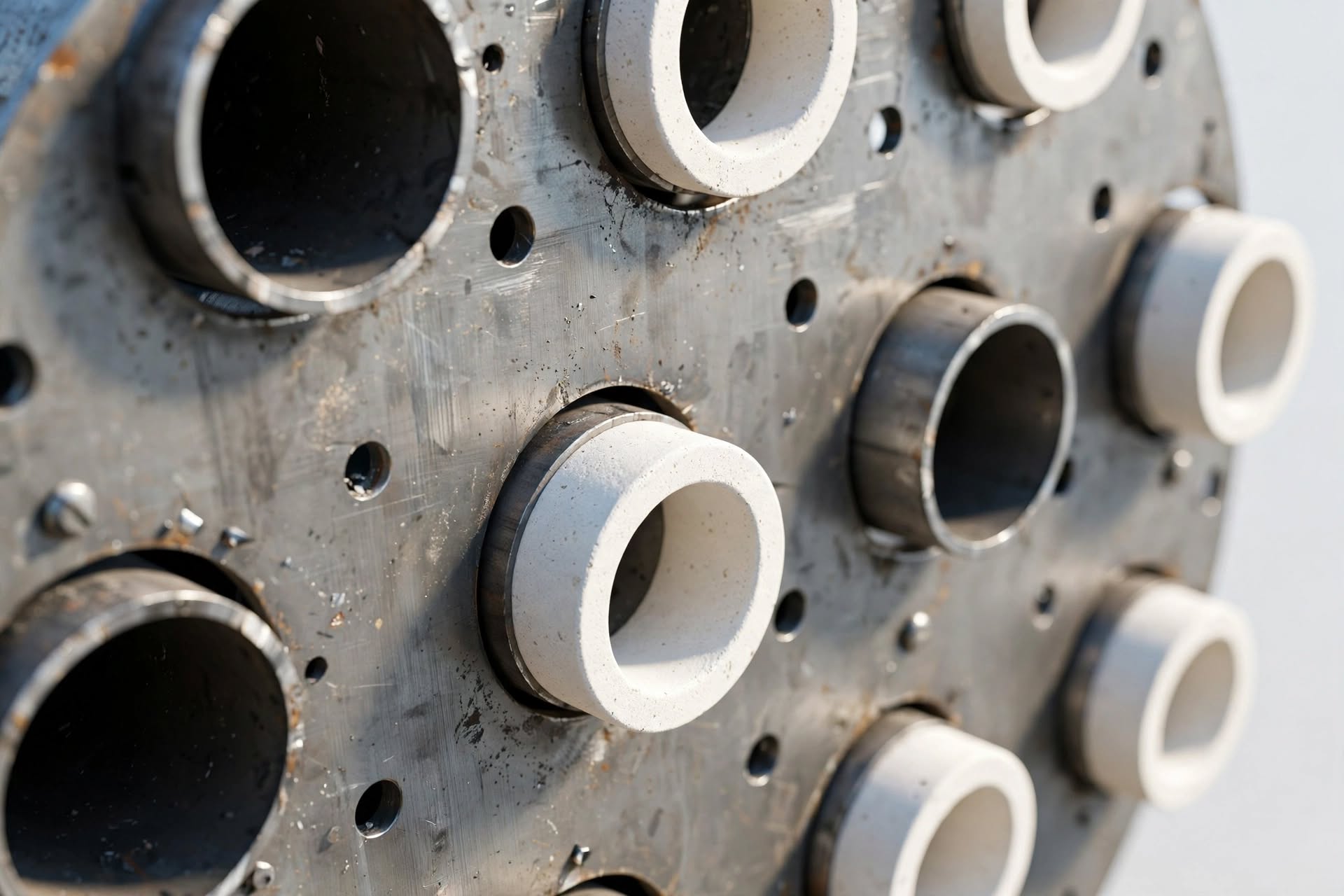
Ceramic ferrules are small parts, but when one fails, the repair is rarely small. A cracked or displaced ferrule can leave the tube end exposed to hot gas, and that can turn a minor fault into an unplanned shutdown.
If you want the basics first, our earlier post explains what refractory ceramic ferrules are and why they matter in boiler tube protection. This guide is for the people who actually handle them: maintenance and reliability engineers, shutdown planners and procurement teams. We will cover what to check before installation, what good installation looks like, why ferrules fail and when to replace them.
Quick Recap: What a Ceramic Ferrule Does
A ceramic ferrule is a shaped refractory sleeve fitted at the inlet end of a boiler or waste heat unit tube. Its job is to shield the tube end and the surrounding tube sheet from the hot gas stream entering the tube, which could otherwise damage the metal.
Because a ferrule sits in a hot, demanding spot and sees temperature swings, it has to be dimensionally accurate, resistant to thermal shock and durable in service. Refshape makes special shapes like ceramic ferrules in 60% to 94% alumina grades, as well as zircon, for industries such as fertilizers, refineries and energy. You can see the wider range on our Bricks and special shapes.
Why Small Details Matter With Ferrules
Ferrules are easy to overlook because they are small, inexpensive compared with the boiler and hidden from view most of the time. That is exactly why problems with them tend to show up late.
A ferrule that is slightly out of tolerance, or seated a little off, may not look like a problem at installation. But under heat, gas flow and repeated start-ups, small misfits can grow into cracks or gaps. Careful checking on day one is far cheaper than chasing a leak or damaged tube sheet later, and it is usually the difference between a ferrule that lasts between shutdowns and one that does not. A few minutes per ferrule during installation is time well spent.
Before Installation: A Simple Checklist
Most installation problems start before the ferrule goes anywhere near the tube. Run through these checks first:
- Check the order against the drawing. Confirm the dimensions, grade and quantity are what you specified.
- Inspect every ferrule. Look for chips, cracks and damaged edges. A cracked ferrule should not go in.
- Check the tube ends. They should be clean, free of scale or deposits and undamaged, so the ferrule can seat properly.
- Check the tube sheet and surrounding refractory. Repair any damage before you fit new ferrules.
- Store them properly. Keep ferrules dry, in their packing, and handle them carefully. Ceramics are hard, but they are also brittle.
- Get the method statement. Follow your boiler OEM’s instructions and your plant’s own procedure.
Installation Practice: What Good Looks Like
The exact method depends on your boiler design and your OEM’s instructions, so treat the points below as general good practice rather than a replacement for those documents.
- Dry fit first. Test that the ferrule seats properly without any force.
- Never force it. Forcing a ferrule into place can crack it or damage the tube end.
- Respect the expansion allowance. Ceramic and steel expand at different rates, so the design usually leaves a gap or specifies a packing or sealing material. Follow the drawing.
- Use the specified backing or sealing refractory and dry it out or cure it as instructed. Skipping this step is a common cause of early cracking.
- Do a final check. Confirm alignment and seating, and make sure there are no loose pieces left behind.
- Keep a record. Note the date, batch and location of each installation. It will help you later.
- Heat up gradually. Follow the start-up procedure for the unit. Fast heating is hard on any ceramic part.
Six Common Causes of Ferrule Failure
When a ferrule fails, it usually points to one of six causes. Here is what each looks like and how to prevent it.
- Thermal shock. Cracks across the body after a sudden temperature change. Prevent it with controlled start-ups and shutdowns, and a ferrule made for the duty.
- Poor fit. Loose ferrules, or gaps that let hot gas reach the tube sheet. Prevent it by checking dimensions and tube condition before installing.
- Erosion. Gradual thinning at the inlet edge, where gas and particles hit first. Prevent it by reviewing gas conditions and dust, and choosing a grade suited to them.
- Chemical attack. Pitting, glazing or softening of the surface caused by process gases or deposits. Prevent it by telling your supplier about the fuel and gas atmosphere so the right material is chosen.
- Mechanical damage. Chips and cracks from cleaning tools, lances or careless handling. Prevent it with careful cleaning and protection during shutdown work.
- Wrong grade for the job. The ferrule itself is fine, but it was never the right one. Prevent it by sharing your operating data with the supplier before ordering.
When to Replace: Reading the Signs
Try not to wait for a forced shutdown to find out. Use every planned shutdown to inspect your ferrules. Signs that a ferrule needs attention include:
- Visible cracks, or chipped and thinned edges.
- Ferrules that are loose or have moved out of position.
- Missing pieces.
- Discolouration or hot spots around the tube sheet.
If several ferrules in one area fail, look for a pattern instead of simply replacing them. The cause could be gas flow, fit or installation practice, and fixing the cause stops the problem returning. Keep a log of your inspection findings. Over time it becomes the best guide you have for planning replacements.
What to Share With Your Supplier When Ordering
Ferrules are precision shapes, so the more your supplier knows, the better the match. Have these ready:
- A drawing or full dimensions, including tolerances.
- Operating temperature and gas composition.
- Fuel type and dust load.
- How often the unit starts and stops.
- Details of any previous failures, including photographs if you have them.
Refshape can manufacture to your drawing, and its long experience with refractory special shapes means the team can often spot issues early. The company has been in the refractory business since 1973.
Final Thoughts
A ceramic ferrule does a small job that protects a much larger and more expensive asset. Careful checks before installation, good fitting practice and regular inspections will do more for ferrule life than any last-minute fix.
Frequently Asked Questions
- What is a ceramic ferrule used for?
A ceramic ferrule is fitted at the inlet end of a boiler or waste heat unit tube. It protects the tube end and the tube sheet from the hot gas stream.
- Where are ceramic ferrules fitted?
At the tube inlet ends in boilers and waste heat units. The exact position and method depend on the design of your unit, so follow your OEM’s drawings.
- What materials are ceramic ferrules made from?
Refshape makes special shapes such as ceramic ferrules in alumina grades from 60% to 94%, and also in zircon. The right choice depends on your operating conditions.
- How long does a ceramic ferrule last?
There is no single answer. Life depends on temperature, gas conditions, dust, start-up and shutdown practice and installation quality. Inspect ferrules at each planned shutdown and record what you find.
- Why do ceramic ferrules crack?
The most common causes are thermal shock, poor fit, mechanical damage and using the wrong grade. Fast heating and cooling is especially hard on ceramic parts.
- Can a cracked ferrule be reused?
It is generally better to replace it. A cracked ferrule may not protect the tube end properly and can break further in service.
- Can ceramic ferrules be made to a custom size?
Yes. Refshape can manufacture special shapes to customer drawings and specifications.
- How should ceramic ferrules be stored?
Keep them dry and in their packing, and handle them carefully. Avoid stacking them loosely or dropping them, as chips can cause failures later.
- What information do I need to give when ordering ferrules?
Share the drawing or dimensions, operating temperature, gas composition, fuel type, dust load, how often the unit starts and stops, and any history of past failures.
- Do ferrules need a dry-out after installation?
If a backing or sealing refractory is used, a dry-out or curing step is normally specified. Follow the instructions from your boiler OEM and refractory supplier.