
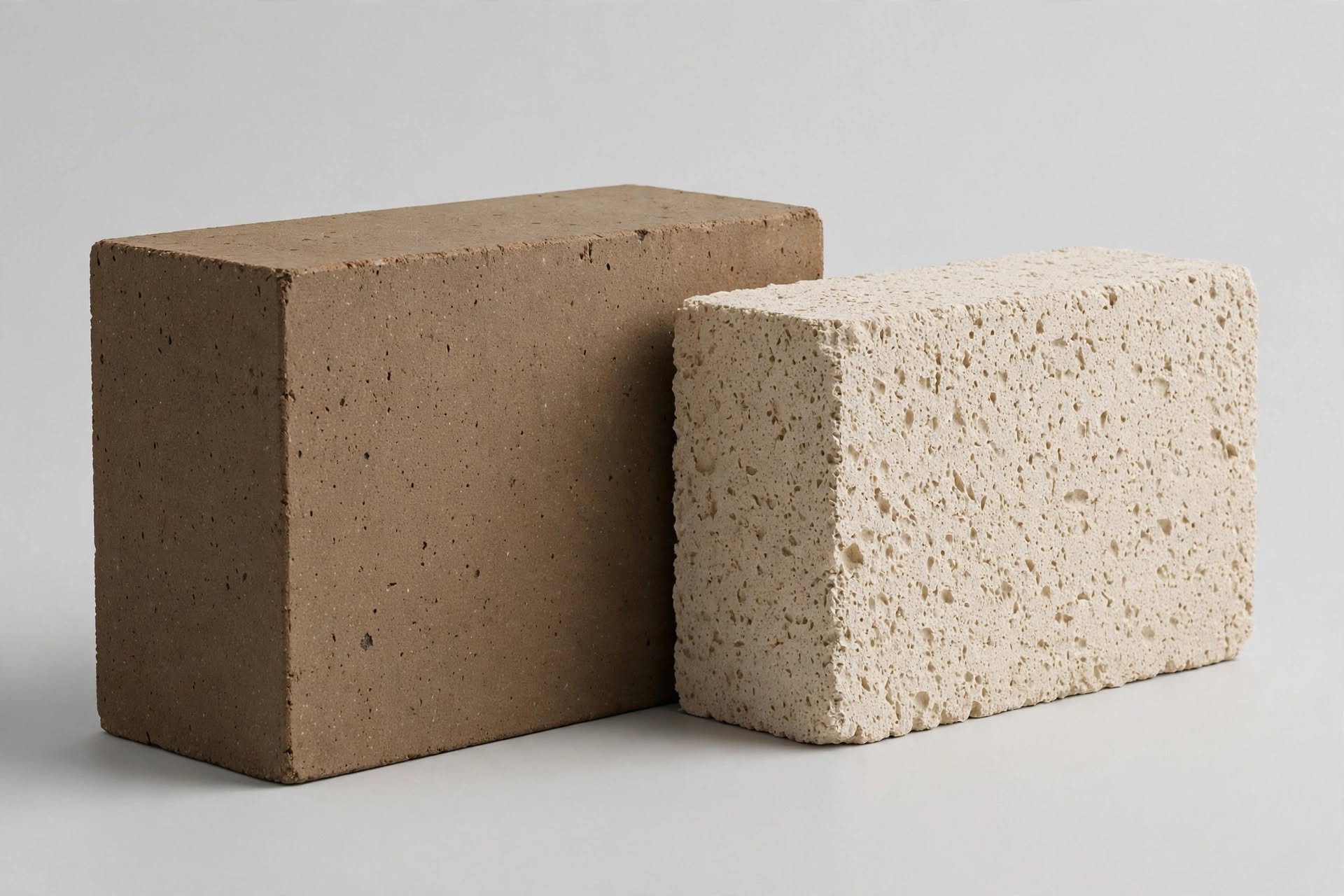
If you have ever looked at the lining of a kiln, you will know it is not one big wall of identical bricks. It is usually built in layers, with different bricks doing different jobs. That is why “kiln bricks vs insulating fire bricks” is a slightly tricky question. It is not really an either/or choice.
The better question is which brick goes where, and why. In this guide we will keep things simple: what each type of brick does, how they differ, how they work together in a lining, and what to ask before you buy. For a wider overview of brick types, you can also read our post on refractory fire bricks, types and grades.
What Are Kiln Bricks?
When people search for kiln bricks, they usually mean dense refractory bricks. These sit on the hot face of the lining, directly exposed to flame, hot gases, dust and, in some kilns, chemical attack. They are dense and strong because they have to carry load and resist wear.
Most are fireclay or high alumina bricks. As a rough rule, more alumina generally means better resistance to heat and chemical attack, which is why demanding zones often call for higher-alumina grades. Refshape’s refractory bricks include fireclay and high alumina grades ranging from 40% to 85% alumina.
For special duties there are two further options in the range. Kyanex is a dense high alumina shape made with tabular alumina, intended for critical high temperature applications. Reframul is a mullite refractory with a minimum of 75% alumina, used in places such as cement kilns, glass tank furnaces and kiln furniture.
What Are Insulating Fire Bricks?
Insulating fire bricks, often shortened to IFBs, have the opposite personality. They are lightweight and full of tiny pores, and that is deliberate. Trapped air is a poor conductor of heat, so the porous structure gives IFBs low thermal conductivity. Less heat escapes through the kiln shell.
There is a trade-off. The pores that make them good insulators also make them weaker, and less able to handle abrasion, slag or heavy mechanical load. Refshape’s Xlite insulating bricks are made from foamed sillimanite and are designed as high temperature, energy-efficient shapes. Insulating mortars are available for jointing both high alumina and insulating bricks. For more on how these bricks are made, see our earlier post on insulating fire bricks.
Kiln Bricks vs Insulating Fire Bricks: Quick Comparison
| Feature | Kiln bricks (dense) | Insulating fire bricks |
|---|---|---|
| Structure | Dense and hard | Lightweight and porous |
| Main job | Withstand flame, wear, load and chemical attack | Reduce heat loss through the lining |
| Strength | High | Lower |
| Thermal conductivity | Higher, so more heat passes through | Low, so less heat passes through |
| Usual position in lining | Hot face or working lining | Backup layer behind dense bricks |
| Weak spot | Lets more heat through on its own | Less resistant to abrasion, slag and heavy load |
| Best suited to | Burning zones and areas with wear or slag | Saving fuel and keeping the shell cooler |
How the Two Work Together in a Kiln Lining
Think of winter clothing. The outer jacket takes the wind and rain, while the warm layer underneath keeps the heat in. A kiln lining works the same way. Dense bricks face the heat, insulating bricks sit behind them, and the steel shell is on the outside. The dense brick protects the structure, and the insulation helps save fuel and keeps the shell cooler.
A few practical points are worth remembering:
- Do not use insulating bricks where dense bricks are needed. In areas with abrasion, dust, slag or knocks from tools, insulating bricks can wear quickly.
- Think about temperature at every layer. The backup layer gets hot too. Your kiln designer or refractory engineer can work out how brick grades and thicknesses combine to keep each layer within its limits.
- Use the right mortar. Joints matter as much as bricks. Match the mortar to the brick type you are laying.
It also helps to think about the life of the lining, not just the day it is installed. A lining that matches its conditions is easier to inspect, easier to repair in sections and less likely to surprise you with an unplanned stop. A lining that does not match can look fine for a while and then fail quickly in one zone, taking the production schedule with it.
Matching Bricks to Your Kiln
Every kiln is different, but some broad guidelines can help you start the conversation with your supplier:
- Cement and lime kilns: dense, higher-alumina bricks tend to go in the zones that face the most heat and wear, with lower grades or insulating bricks used in cooler areas.
- Glass and ceramic-related kilns: frequent heating and cooling makes thermal shock resistance important. Mullite-based shapes such as Reframul are used in glass tank furnaces and as kiln furniture.
- Batch or intermittent kilns: a lighter, insulated lining heats up with less effort, so insulating bricks are often attractive here.
Treat these as starting points only. Always confirm the final selection with your kiln designer or OEM.
Common Mistakes When Choosing Kiln Bricks
Most lining problems can be traced back to a handful of avoidable choices:
- Choosing on price alone. A cheaper brick that is wrong for the zone will cost more once you count the shutdown to replace it.
- Using one brick type everywhere. Different zones see different temperatures and different wear, so one grade rarely suits the whole kiln.
- Ignoring heating and cooling cycles. A kiln that starts and stops often puts more thermal stress on the lining than one that runs continuously.
- Forgetting the joints. The wrong mortar, or joints that are too thick, can become the weak point of an otherwise good lining.
- Heating up too fast after relining. New linings need a controlled first heat-up. Follow the schedule given by your supplier or kiln OEM.
Five Questions to Ask a Kiln Brick Supplier
- What is the alumina content, and which grade do you recommend for each zone?
- Can you share a data sheet covering bulk density, cold crushing strength and maximum service temperature?
- What dimensional tolerance do you work to? Accurate sizes make for tighter joints and easier laying.
- Can you supply special shapes and the matching mortar?
- Do you offer technical support during selection and installation?
Refshape has manufactured refractories since 1973 and also produces special shapes to customer requirements, so these are questions we are happy to answer.
Final Thoughts
Kiln bricks and insulating fire bricks are not rivals. They are teammates. Dense bricks protect the lining from the harshest conditions, and insulating bricks help keep heat where it belongs. The right combination depends on your kiln type, your operating conditions and where each layer sits.
Frequently Asked Questions
- What are kiln bricks made of?
Most kiln bricks are made from fireclay or high alumina refractory materials. Different grades contain different amounts of alumina, and higher alumina generally gives better resistance to heat and chemical attack.
- What is the difference between kiln bricks and insulating fire bricks?
Kiln bricks are dense and strong and face the heat directly. Insulating fire bricks are lightweight and porous, and their job is to reduce heat loss. Most kiln linings use both.
- Can insulating fire bricks be used directly against the flame?
Sometimes, in clean and low-wear conditions, if the brick’s temperature rating suits the duty. They are not suited to areas with heavy abrasion, slag, dust or mechanical load. Always check with the manufacturer.
- Do insulating fire bricks save fuel?
They reduce heat loss through the lining, which can help lower fuel use. The actual saving depends on your kiln design, lining thickness and how the kiln is operated.
- Which alumina grade should I choose for my kiln?
It depends on the zone, temperature and type of wear. Refshape’s fireclay and high alumina bricks range from 40% to 85% alumina. Share your kiln details with the team and they can recommend a suitable grade.
- Can I use ordinary clay bricks inside a kiln?
Ordinary building bricks are not made for kiln temperatures and are likely to crack or fail. Use refractory bricks designed for the temperature and conditions inside your kiln.
- What mortar should I use with kiln bricks?
Use a refractory mortar matched to the brick type. Refshape offers insulating mortars for jointing high alumina bricks and insulating bricks.
- What are Kyanex and Reframul?
Kyanex is Refshape’s dense high alumina refractory shape made with tabular alumina, for critical high temperature applications. Reframul is a special mullite refractory with a minimum of 75% alumina, used in applications such as cement kilns, glass tank furnaces and kiln furniture.
- Can kiln bricks be made in special shapes?
Yes. Refshape produces special shapes to customer requirements. Share your drawing or dimensions with the team to discuss options.
- How do I know when kiln bricks need replacing?
Look for cracks, spalling, visible thinning, loose or displaced bricks and hot spots on the kiln shell. Check the lining at every planned shutdown so you can plan repairs rather than react to failures.