
Once you have decided a burner block needs replacing, the next question is what to replace it with. If you are still at the first stage, our guide to the five signs your burner block needs replacement is a good place to start.
The choice of material and manufacturing route matters more than many buyers expect. It is also a timely question. A June 2026 report from Choice Institutional Equities projects India’s crude steel production rising from 168.4 MnT in FY26 to 255 MnT by FY31. More furnaces running for longer puts more demand on every part around the flame, and the burner block is one of them. This guide explains the three common ways burner blocks are made and how to match them to your conditions.
What Does a Burner Block Do?
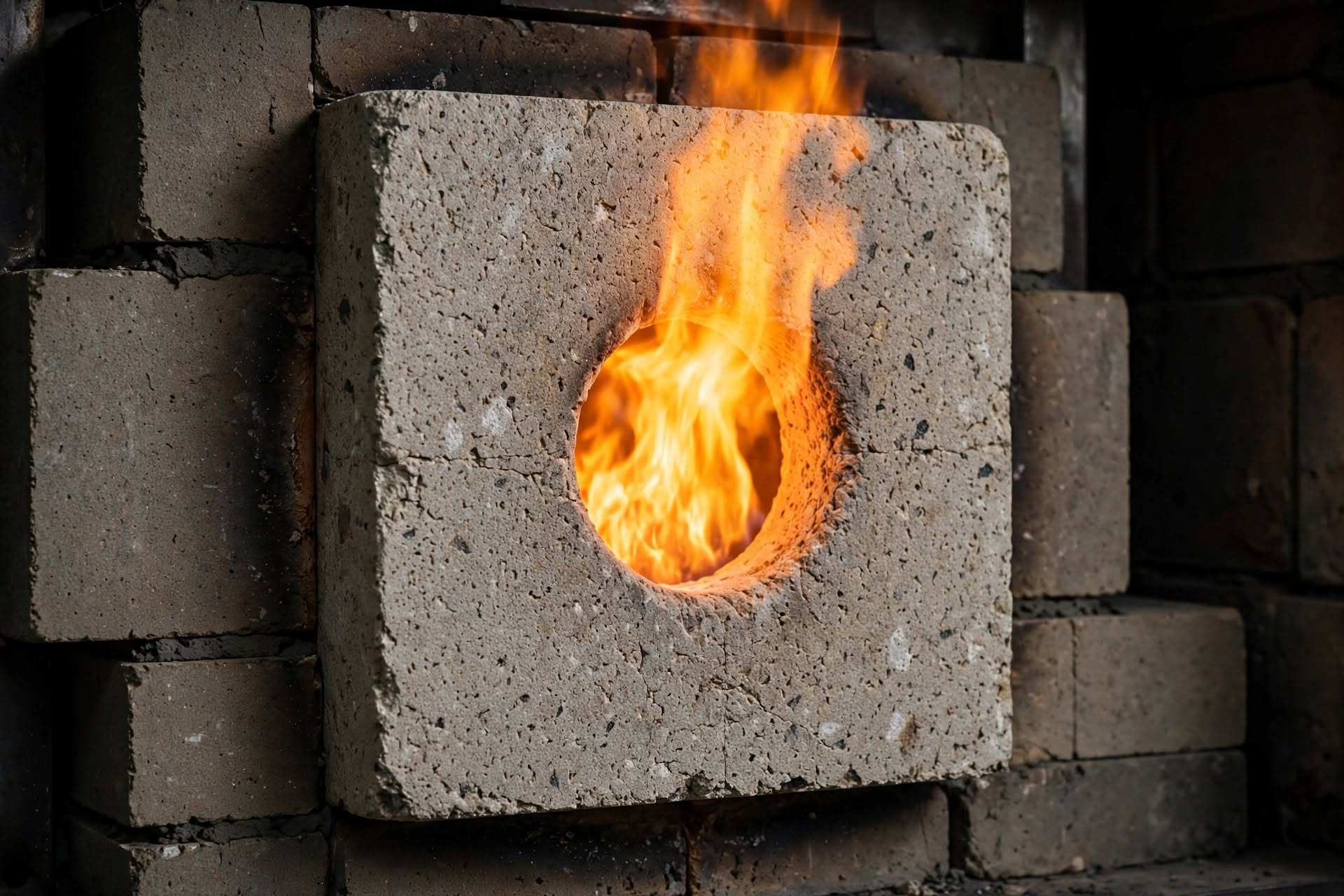
A burner block sits around the burner opening in a furnace or kiln. It holds the flame shape, guides the combustion and protects both the furnace wall and the burner hardware from direct heat.
It is also one of the toughest spots in the whole furnace. The block faces the flame, hot gases and repeated heating and cooling every time the furnace starts or stops. That is why material and build quality matter so much here.
Three Ways Burner Blocks Are Made
1. Castable (cast in place)
The block is formed using a castable refractory, which is mixed with water, poured into a mould or form and allowed to set. It gives you flexibility. Unusual shapes and awkward openings are easy to handle. The catch is that quality depends on careful mixing, correct water addition and proper curing, and those variables are harder to control on site.
2. Precast
Precast blocks are cast in controlled workshop conditions, then cured and dried before they reach you. The result is a more consistent product that arrives ready to install, which can reduce time spent on site. The trade-off is that dimensions need to be confirmed in advance, and the block needs careful handling in transit and during installation.
3. Pre-fired (sintered)
Pre-fired blocks are shaped and then fired at high temperature so that a ceramic bond forms. This route is often chosen for demanding duties where a dense, consistent block is wanted. The trade-off is that shapes are set by moulds and tooling, so very large or unusual designs can be harder to produce.
No single route is best for every furnace. The right choice depends on your burner, fuel, operating pattern and how quickly you need the block in place. Refshape’s castables range is one route, and its refractory shapes are another.
Material Choice: What Is Inside the Block?
Beyond the manufacturing method, the material itself makes a difference. Alumina content and the bonding system affect heat resistance, strength and resistance to chemical attack. As a general rule, higher alumina supports higher temperature duty, while additives and bonding choices can be used to improve properties such as thermal shock resistance.
Refshape’s Reframul range of special mullite refractory shapes, with a minimum of 75% alumina, lists burner blocks among its applications, alongside cement kilns and glass tank furnaces. You can find the full range on our Bricks. The best match for your furnace depends on your own conditions, which is why sharing them with your supplier really helps.
Match the Burner Block to Your Conditions
Use this table as a conversation starter with your supplier. It is general guidance, not a specification.
| Condition | What to think about | Direction |
|---|---|---|
| Fuel type (gas, oil or solid fuel) | Ash and residues from some fuels can attack refractories chemically, while gas flames tend to be cleaner | Tell your supplier the fuel and ash content so a suitable grade is chosen |
| Flame intensity and direction | A strong, fast flame can erode the block surface over time | Look for a dense, strong material |
| Frequent starts and stops | Repeated heating and cooling stresses the block | Choose a grade with good thermal shock resistance |
| Dust, slag or alkalis | These can build up on or penetrate the block | Look for a dense, low-porosity option |
| Furnace atmosphere | Oxidising and reducing atmospheres affect some materials differently | Confirm the grade suits your atmosphere |
Design and Installation Factors That Extend Life
Even the best block will underperform if it is installed poorly. Keep these points in mind:
- Anchoring and support. The block must be held firmly so it does not shift or loosen with heat cycles.
- Expansion allowance. Leave joints and gaps as specified, because refractories and steel expand at different rates.
- Curing and dry-out. Castable and precast blocks need to be dried and heated gradually. Follow your supplier’s schedule.
- Alignment. A block that is out of line with the burner can push the flame towards the wall and speed up wear.
- Regular inspection. Check the block at every shutdown and record what you see.
Common Mistakes When Choosing a Burner Block
- Copying the old block without asking why it failed. If the last block cracked or eroded early, a like-for-like replacement may repeat the problem. Look at the failure first.
- Choosing on price alone. A block that does not suit your fuel or flame will cost more in shutdowns than it saves at purchase.
- Not sharing operating details. Suppliers can only match the material to conditions they know about.
- Skipping the dry-out. Heating a new block too quickly can crack it before it has done any work.
- Ignoring burner changes. If you have changed fuel or burner settings, the old block specification may no longer be the right one.
What to Share for a Custom Burner Block
If you need a block made to your design, the following details will help your supplier get it right the first time:
- A drawing or dimensions of the block and the burner opening.
- The burner make and model.
- Fuel type and operating temperature.
- How often the furnace starts and stops.
- The furnace atmosphere.
- The history of the old block, including photos of any damage.
Final Thoughts
Castable, precast and pre-fired burner blocks all have a place. What matters is matching the block to your fuel, flame and furnace pattern, and then installing it carefully. A few questions asked early can save a lot of trouble later, and a block chosen with care is one you will not have to think about until the next planned shutdown.
Frequently Asked Questions
- What is a burner block?
A burner block is a refractory component fitted around the burner opening in a furnace or kiln. It holds the flame shape, helps direct combustion and protects the furnace wall and burner from direct heat.
- What materials are burner blocks made from?
They are made from refractory materials such as castables and shaped refractories with different alumina contents. Refshape’s Reframul mullite shapes, for example, list burner blocks among their applications.
- What is the difference between castable and precast burner blocks?
A castable block is formed from a castable mix and cured in place or in a mould. A precast block is cast and cured in controlled workshop conditions before delivery, so it arrives ready to install.
- What is a pre-fired burner block?
A pre-fired block is shaped and then fired at high temperature so a ceramic bond forms. It is often chosen for demanding duties where a dense, consistent block is needed.
- How do I know when my burner block needs replacing?
Watch for cracks, erosion, distorted flame shape and damage to the surrounding refractory. Our guide to the five signs your burner block needs replacement covers this in detail.
- Can burner blocks be made in custom shapes?
Yes. Refshape can manufacture to customer drawings and specifications. Share your dimensions and burner details with the team.
- Why do burner blocks crack?
Common causes include thermal shock from fast heating or cooling, poor anchoring, expansion problems, flame impingement and using a material that is not suited to the duty.
- Does the fuel type affect which burner block I should choose?
It can. Ash and residues from some fuels can attack refractories chemically, while clean gas flames tend to be less aggressive. Always tell your supplier which fuel you use.
- Does a new burner block need a dry-out?
Castable and precast blocks normally need to be dried and heated gradually. Follow your supplier’s dry-out schedule to avoid cracking on first firing.
- What information do I need to give for a burner block quote?
Share a drawing or dimensions, the burner make and model, fuel type, operating temperature, start-stop pattern, furnace atmosphere and details of how the old block failed.